
The Overlooked Impact of Food Insecurity on Our Aging Neighbors
"I have been able to put healthy food in my almost 71-year-old body. Words cannot begin to express my gratitude."
That's Liz, one of our customers. She was sitting down to a salad when she wrote it.
Her age has stayed with me because of a study I read this week.
We talk a lot about what food insecurity does to children, and for good reason. One in five children in our community faces food uncertainty. At the exact time their brains and bodies are developing, when they're learning and growing, taking away consistent access to nutritious food can be devastating.
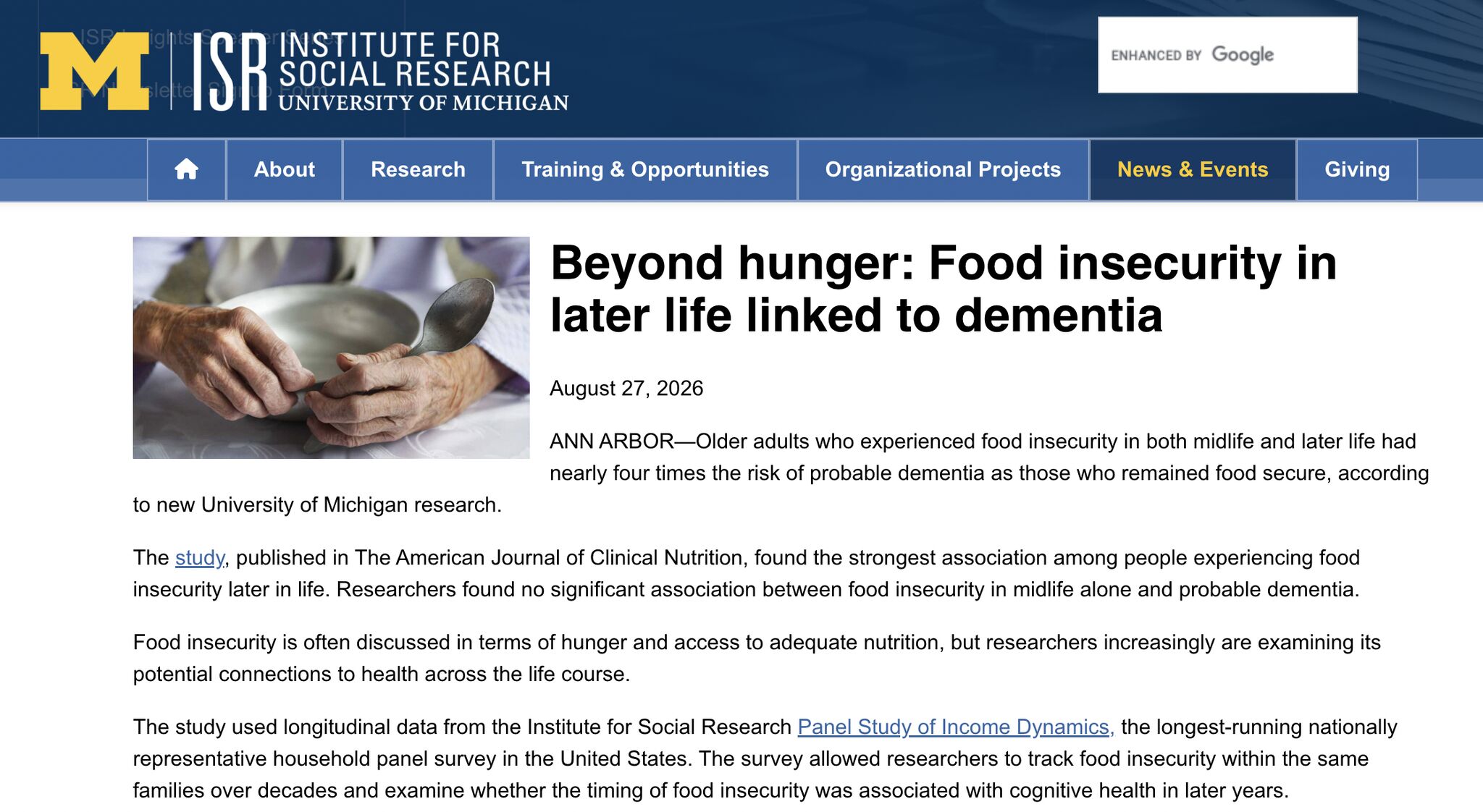
But I came across a study in in The American Journal of Clinical Nutrition that made me think about the other end of life, too. Researchers followed 2,051 adults and looked at food insecurity in midlife and later life, then at who went on to develop probable dementia.
Among people who experienced food insecurity at both points, the estimated probability of probable dementia was around 40 percent.
For those who were consistently food secure, it was around 11 percent.
Those numbers need some care. This was an observational study. It found an association, not causation. It does not tell us that food insecurity causes dementia.
But it raises a critical question.We understand how devastating it is to deprive a developing brain of the nutrition it needs. What if food insecurity later in life may also be doing harm to an aging brain at a particularly vulnerable time?
The strongest association in the study was with food insecurity in later life.
That makes me think about our older neighbors living on fixed incomes, trying to stretch a month across groceries, prescriptions, utilities, housing, and everything else.
It makes me think of Ms. Stephanie, another older adult at The Store, talking about how the money she saves on groceries helps her balance expenses while caring for multiple generations of her family.
And I think of Liz, sitting down to a fresh salad at almost 71, grateful to put healthy food in her body.
These aren't small choices. And increasingly, I'm wondering whether we understand all of what is at stake when an older adult can't reliably make them.
We work alongside partners like Fifty Forward and The West End Home Foundation who know and serve older adults across Middle Tennessee. At The Store, we're also seeing firsthand how great the need is. There are still far more neighbors waiting for access than we have room to serve today.
A study like this doesn't give us all the answers. But I think it gives us another reason to pay attention to older neighbors who may be making impossible choices behind closed doors.If someone in your life is stretching a fixed income further than it can reasonably go, check in. Ask the extra question. Help them find the resources available in their community.Sometimes making sure someone has enough healthy food may mean more than we know.
Food insecurity doesn't stop affecting people as they get older. In this reflection, Brad explores research examining the potential relationship between food insecurity later in life and cognitive health, alongside the experiences of older adults at The Store. Through the stories of neighbors like Liz and Ms. Stephanie, he highlights the importance of consistent access to nutritious food for older adults, many of whom are balancing groceries with the rising costs of healthcare, housing, and everyday essentials. It's a reminder to pay closer attention to the needs of our aging neighbors and the role healthy food plays throughout every stage of life.
More from The Store
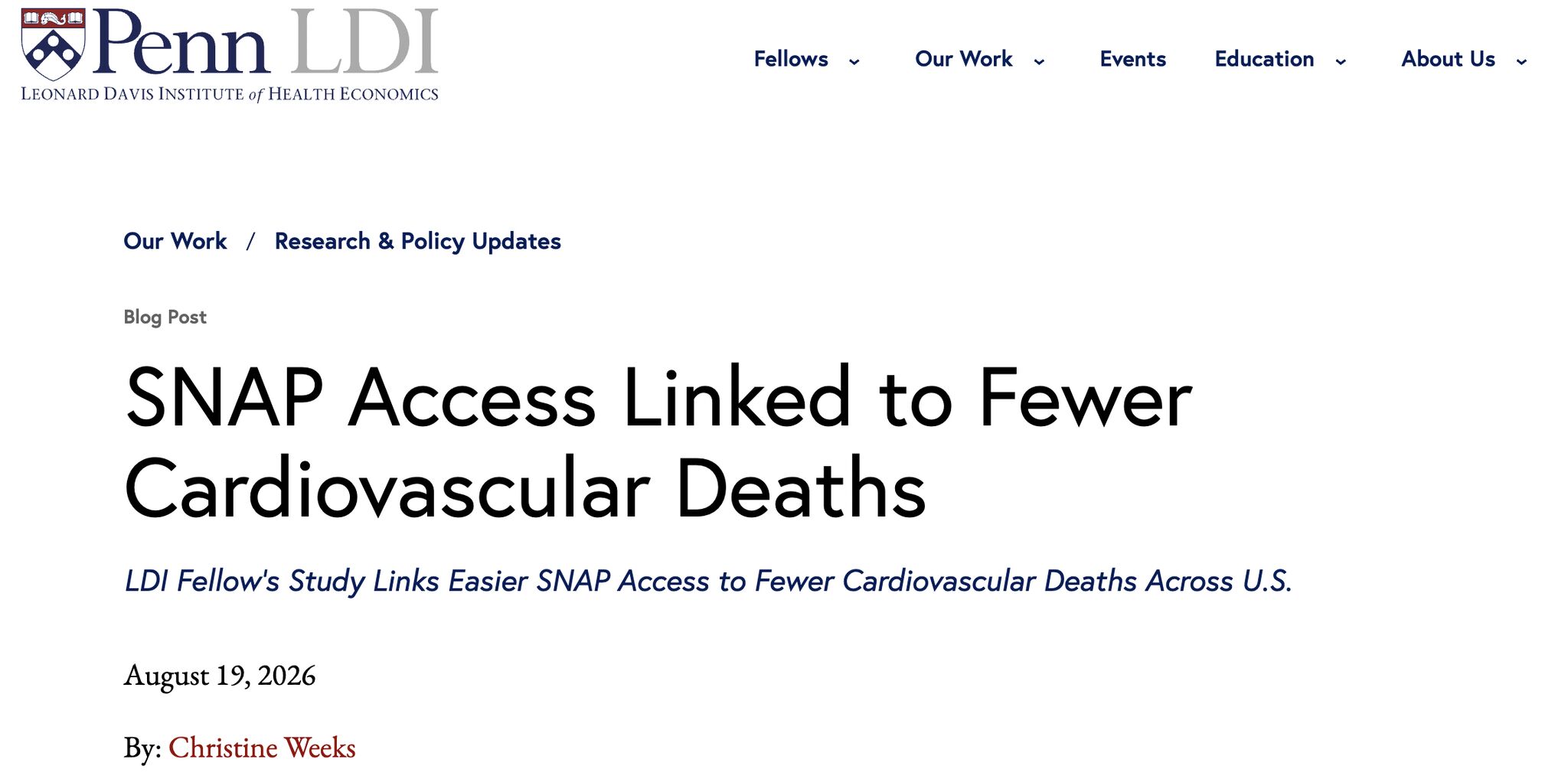
The Connection Between Fresh Food and Better Health
Access to nutritious food can make a difference far beyond the grocery aisle. New research highlights the connection between food assistance and heart health, while stories from The Store’s shoppers show how the freedom to choose fresh, healthy foods can support well-being and improve lives.
Read More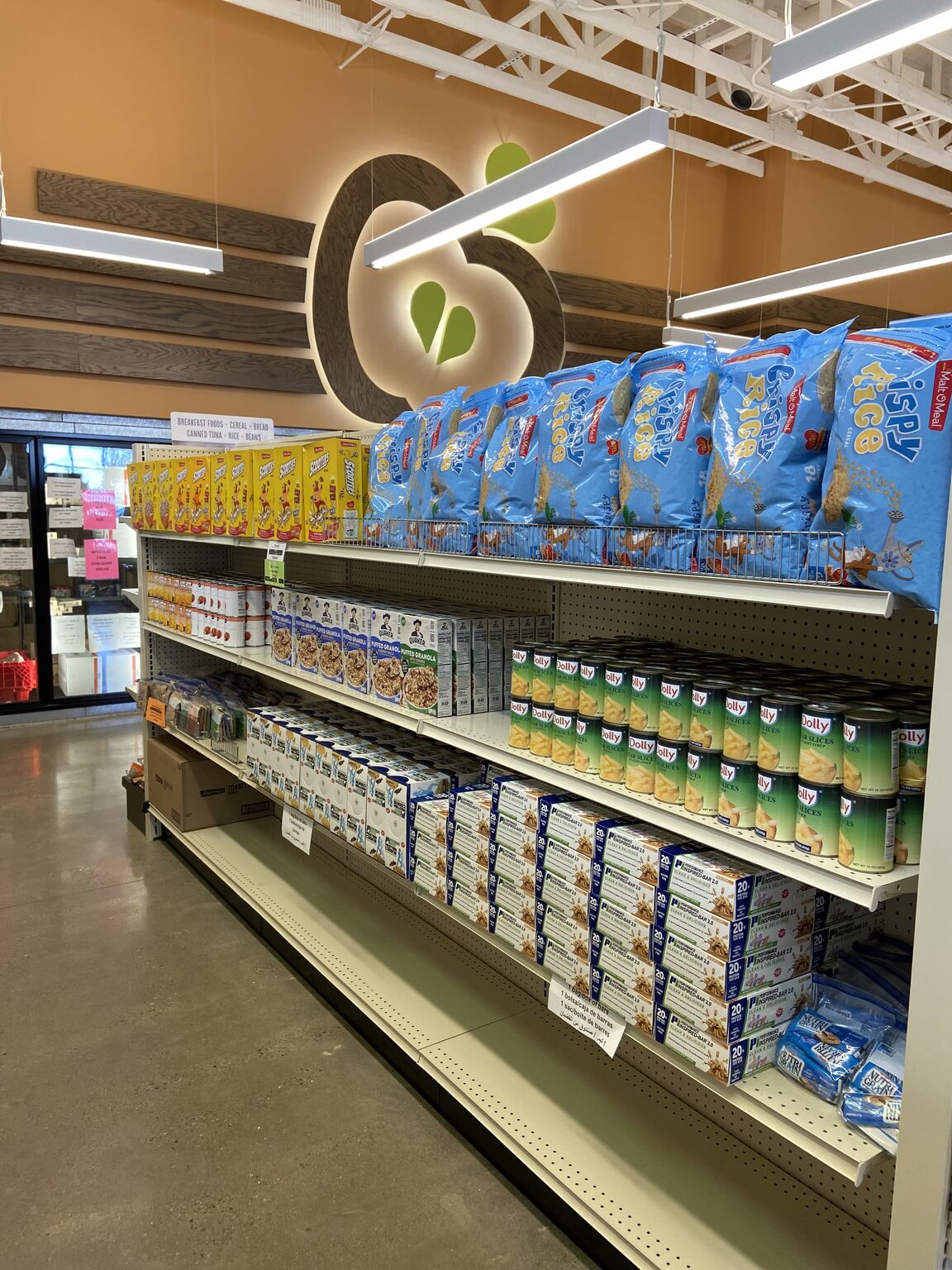
The Mila Aisle: What Dignity Looks Like at Seven
One family has given an aisle at The Store a special name: the Mila aisle, filled with a seven-year-old girl's favorite snacks and cereals. Through Mila's story, Collen reflects on what food security and dignity can mean for children—not just having food they enjoy at home, but having the freedom to focus on reading, dreaming about the future, and imagining the ways they'll one day contribute to their community.
Read More