
The Cost of Hunger Doesn’t Disappear—It Moves
Cutting food assistance doesn’t remove the cost of hunger. It only moves it around.
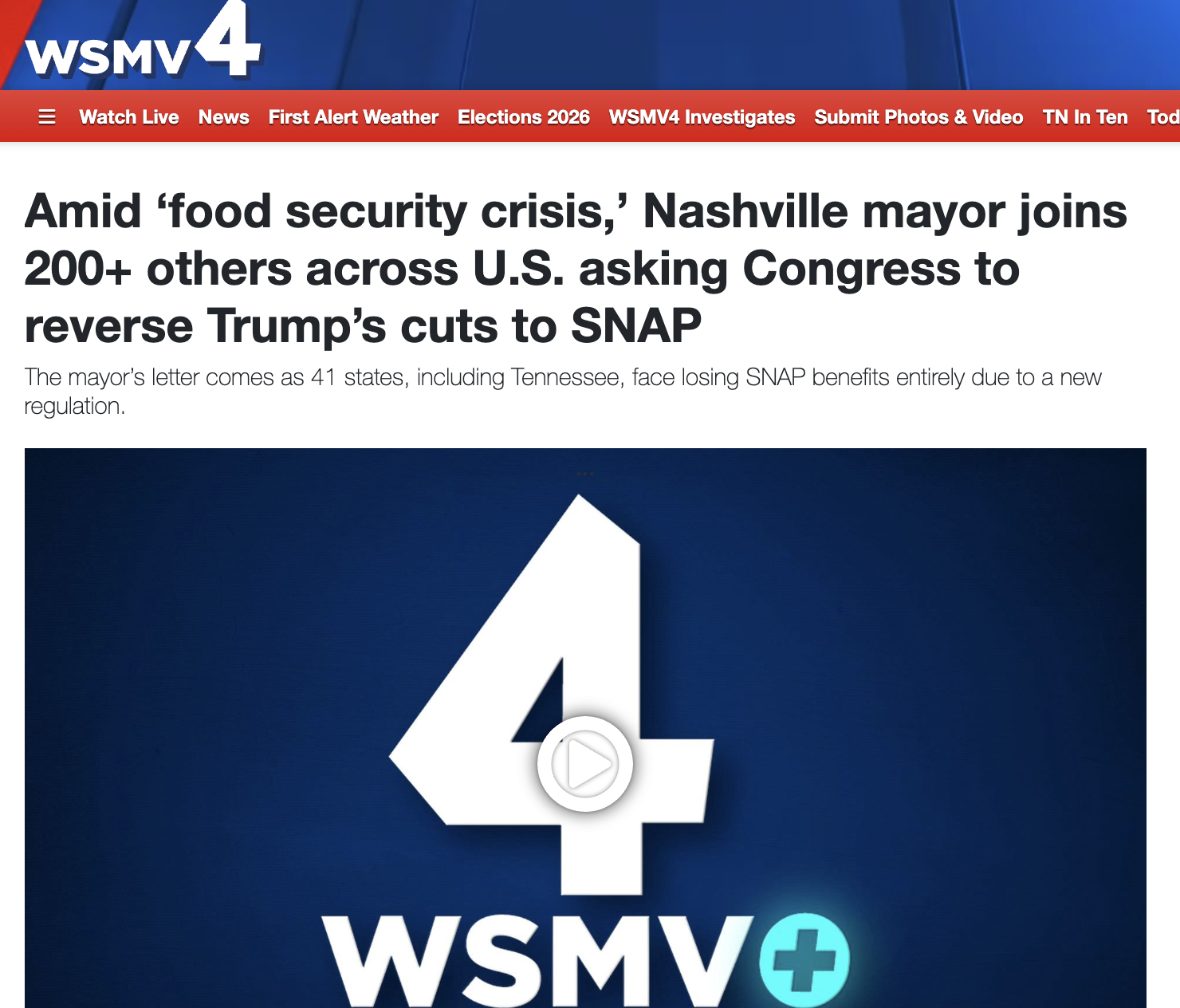
That’s what 210 mayors were writing to Congress about this summer.
Nashville Mayor Freddie O'Connell was one of them.
The mayors were asking Congress to reverse the SNAP cuts already put into law and to delay new costs being shifted onto states.
What caught my attention wasn’t just the number who signed on.
It was how broadly that concern was shared.
Mayors from both parties and from very different communities signed the same letter. More than 100 of the signers came from states that voted Republican in 2024.
On an issue where it’s easy to expect a partisan divide, they were raising the same practical concern:
When the cost of hunger moves, somebody still has to carry it.
Their argument was partly an accounting one.
When people can’t afford food, the consequences don’t disappear. Families absorb them first. But they can eventually show up in health systems, emergency services, nonprofits, local businesses and government budgets.
Local grocers that depend on SNAP purchases feel it too.
The cost doesn’t vanish.
It changes address.
There are thoughtful disagreements about how large SNAP should be and how it should work. I don’t think we need to pretend otherwise.
But almost everyone I talk to, across the spectrum, wants the same basic things. They want programs to work. They want families to become stable and stay stable. They want public and private dollars used well.
The harder question is whether moving the cost actually makes anything better.
What I can tell you is what we see from our floor.97% of the people who shop at The Store put the money they save toward another essential need.
Rent. A car repair. A medical bill.
That’s the whole point. Groceries make room in a budget that didn’t have any.
When that room goes away, the need doesn’t.
The family absorbs it first. Then communities, nonprofits, health systems, businesses and local governments feel it in different ways.
I think we’re allowed to ask where the cost went. Not as partisans, but as people trying to make something work better for families.
I’ve never seen a need get cheaper simply because it moved somewhere else.
When food assistance is reduced, the financial impact doesn’t simply go away. Reflecting on a letter signed by 210 mayors, including Nashville Mayor Freddie O’Connell, The Store explores how the costs of food insecurity can shift from families to nonprofits, businesses, health systems, and local communities.
More from The Store
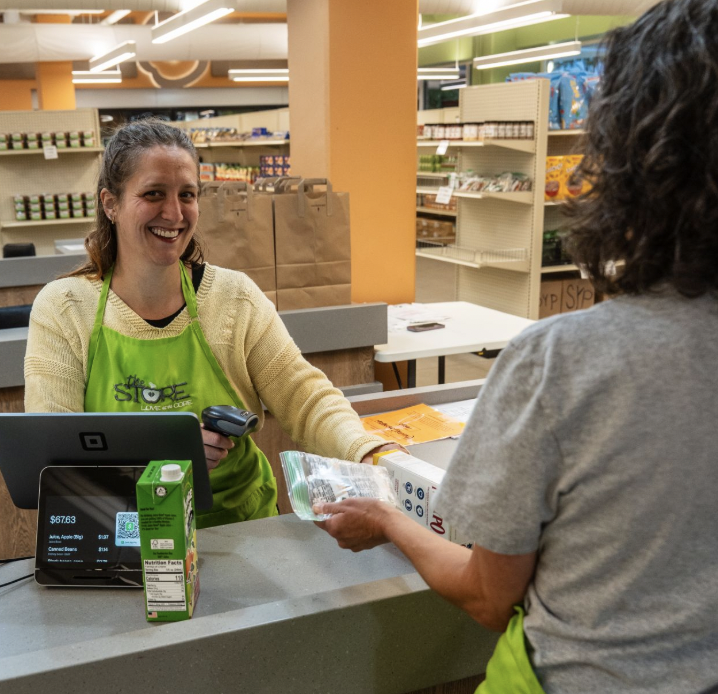
Standing in the Gap: The People Behind The Store Experience
When summer volunteer shortages stretched The Store’s team, staff and volunteers stepped in wherever they were needed. The result? Our customers didn’t notice a difference—a powerful reflection of the people committed to making dignity, choice, and care non-negotiable.
Read More.JPG)
Building the Next Generation of Leaders at The Store
Applications are open for The Store’s Young Professionals Board, a two-year opportunity for emerging leaders to serve their community, take on meaningful responsibility, and help advance our mission of providing groceries with dignity and choice.
Read More